Amazon AWD vs. FBA: Which Strategy Works Best for Your Business?
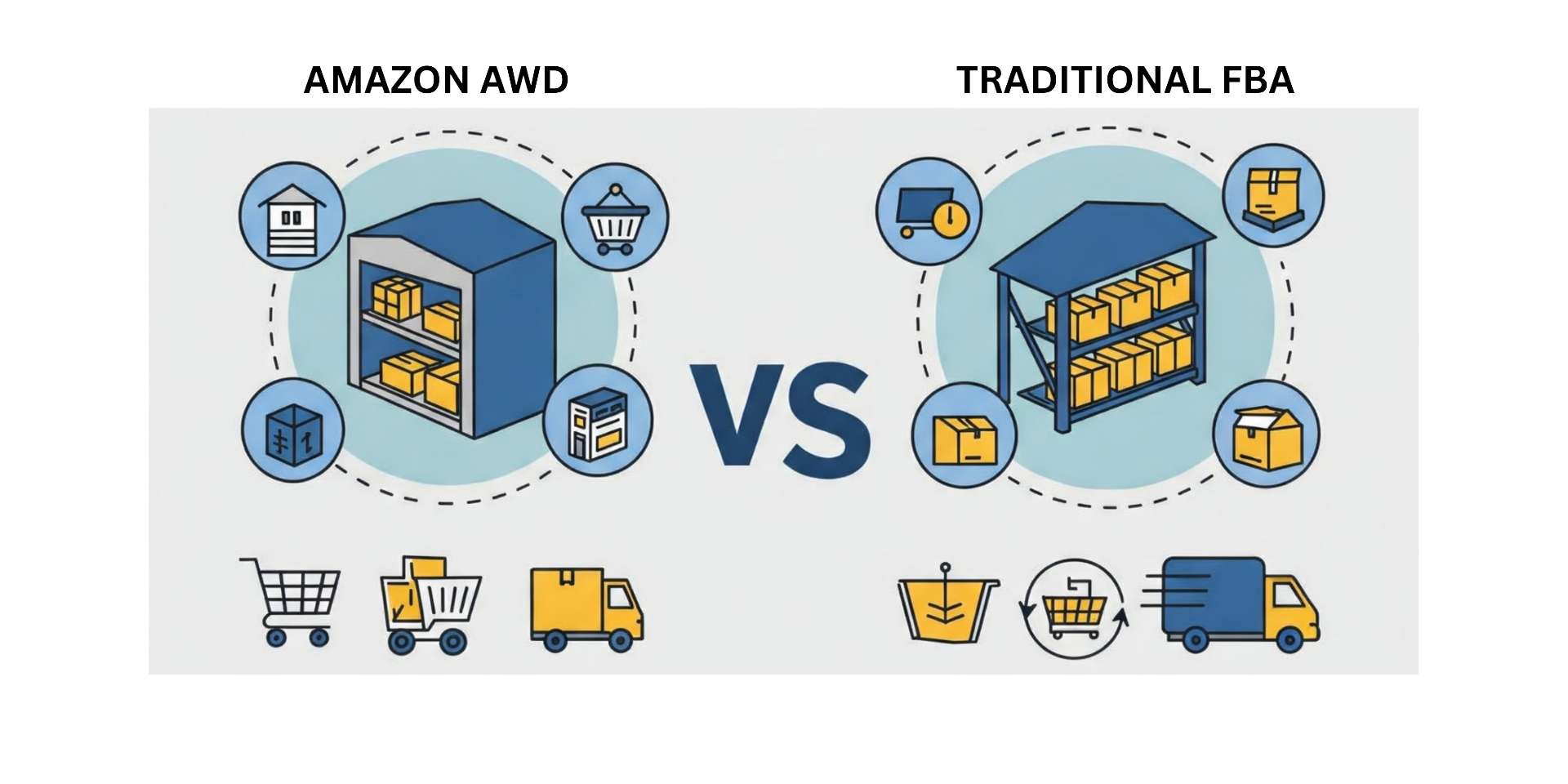
Amazon AWD vs. FBA: Which Strategy Works Best for Your Business?
As the e-commerce landscape evolves, many sellers are reassessing how they handle warehousing and logistics through Amazon. Two prominent programs—Amazon AWD (Amazon Warehousing & Distribution) and Amazon FBA (Fulfillment by Amazon)—both offer distinct advantages. At Fulfilled Pro, we help you decide which option—or hybrid approach—is the best fit for your business.
Quick Takeaways
Amazon AWD is optimized for bulk storage and distribution across channels.
Amazon FBA delivers a full fulfilment experience: storage + picking/packing + shipping + customer service.
The ideal choice depends on your product volume, turnover rate, and fulfillment complexity.
AWD can reduce certain layers of cost, but it may introduce trade-offs in speed and control.
FBA offers speed and convenience, but with higher storage costs and more potential surcharges.
What is Amazon FBA?
Amazon FBA allows sellers to send inventory to Amazon’s fulfilment centers, where Amazon handles storage, order fulfilment, shipping to customers, and even customer service or returns. Under this model, you relinquish the bulk of the logistical operations and benefit from Amazon’s scale and network.
What is Amazon AWD?
Amazon AWD is a service designed to give sellers access to Amazon’s warehouses primarily for bulk inventory storage, combined with distribution into Amazon’s network—or into other channels—as needed. It is not a full fulfilment service in itself; rather, it serves as a warehousing and distribution layer, letting sellers store large volumes, delay movement until needed, and send to FBA or other destinations when the time is right.
Key features of AWD include:
Dedicated warehousing space for bulk goods.
Automated replenishment into FBA or other sales channels.
Option for multichannel distribution (not just Amazon customers).
Generally lower per-unit storage cost (especially for slower-moving inventory).
How AWD and FBA Differ
Here’s a comparison of how AWD and FBA stack up across several critical dimensions:
1. Service Scope
FBA: Includes full fulfilment — storage, picking/packing, shipping, customer service, returns.
AWD: Focused on storage and distribution; the handling and shipping to end-customer still require a channel (often FBA) or separate fulfilment service.
2. Cost Structure
FBA: Typically higher storage costs, especially during high-volume seasons or for slow-moving stock. Surcharges such as long-term storage, low-inventory or peak surcharges may apply.
AWD: Lower cost for bulk storage; fewer peak season surcharges; can avoid some extra fees related to direct fulfilment. However, you’ll still incur shipping/inbound/outbound costs when moving into FBA or other channels.
3. Ideal Use Case
FBA: Best when you have inventory that sells quickly (high turnover), predictable demand, and you want minimal handling.
AWD: Best when you have larger volumes, slower moving inventory, need cost-effective bulk warehousing, and are comfortable managing replenishment into your active fulfilment channel.
4. Flexibility & Control
FBA: Highly convenient, but less control over exactly when inventory moves, and more dependence on Amazon’s internal logistics.
AWD: Gives you more control over timing of distribution and can be paired with other fulfilment services or your own operations.
Cost Comparison — What to Watch
While exact numbers vary based on product size, category, time of year and turnover rate, here are some general observations:
Bulk‐storage costs in AWD can be significantly lower than FBA’s storage rates, particularly during peak seasons for FBA.
With FBA, you may face inbound placement fees (when Amazon splits shipments), aged inventory surcharges, low inventory fees, and higher seasonal storage rates.
Using AWD means you’re paying primarily for storage + distribution to your active channel, so your timing and replenishment strategy become increasingly important to avoid stockouts or excess inventory.
Which Should You Choose? A Decision Guide
Choose AWD if you:
Have large inventory volumes and slower sales cycles.
Want to hold stock in bulk without committing to rapid turn.
Need lower monthly storage cost and can manage replenishment into your active fulfilment channel.
Maintain flexibility across sales channels (not exclusively Amazon).
Choose FBA if you:
Sell items quickly and consistently.
Want Amazon’s full fulfilment experience with Prime eligibility, minimal hands-on management.
Need speed, simplicity and have predictable restock and turnover cycles.
Are comfortable with higher storage cost because your units move fast.
Consider a hybrid approach:
Many sellers benefit from using AWD for slower moving, bulk inventory, and routing fast-sell items into FBA directly. This way you optimise cost for your slow inventory while maintaining speed for your fast inventory.
At Fulfilled Pro, How We Help
We review your historical sales data, inventory-turnover, SKU profiles, and cost structures.
We map your lead times, replenishment needs, and sales velocity to recommend whether AWD, FBA or a hybrid model fits your business.
If you lean into AWD, we help coordinate warehousing, scheduling of bulk storage, and trigger logic for replenishment.
For FBA or hybrid models, we manage the inbound, prep, packaging, labelling and compliance so you’re efficient and “Prime ready”.
We continuously monitor performance: cost per unit stored, cost per unit shipped, days in inventory, and make adjustments to ensure your supply-chain is optimised.
Final Thoughts
Whether you select AWD, FBA or a combination, your decision should be based on how fast your inventory moves, how much volume you have, how much control you want, and which costs you’re willing to accept. With the right strategy and partner, you can balance cost with service, and ensure your logistics supports growth—not holds it back.
At Fulfilled Pro, we specialise in tailoring fulfilment models to match your unique business needs. If you’d like to explore which option is best for your operations, get in touch—we’ll craft a custom plan aligned with your volume, sales velocity and budget.